To test a hotel booking engine for conversion power, you need to track how many visitors actually complete a booking, not just how many visit your site. This means measuring drop-off at each step, testing speed on mobile, and comparing your results against industry benchmarks. A booking engine that looks good but leaks guests at checkout is costing you real revenue.
Most hotels focus on driving traffic to their website. Fewer hotels check whether that traffic turns into bookings once it lands on the booking engine. This gap is where a lot of direct revenue quietly disappears.
This guide walks you through a practical, repeatable way to test your booking engine. You will learn what to measure, which tools to use, and how to read the results like a hotel revenue manager, not just a marketer.
Why Conversion Testing Matters for Hotel Booking Engines
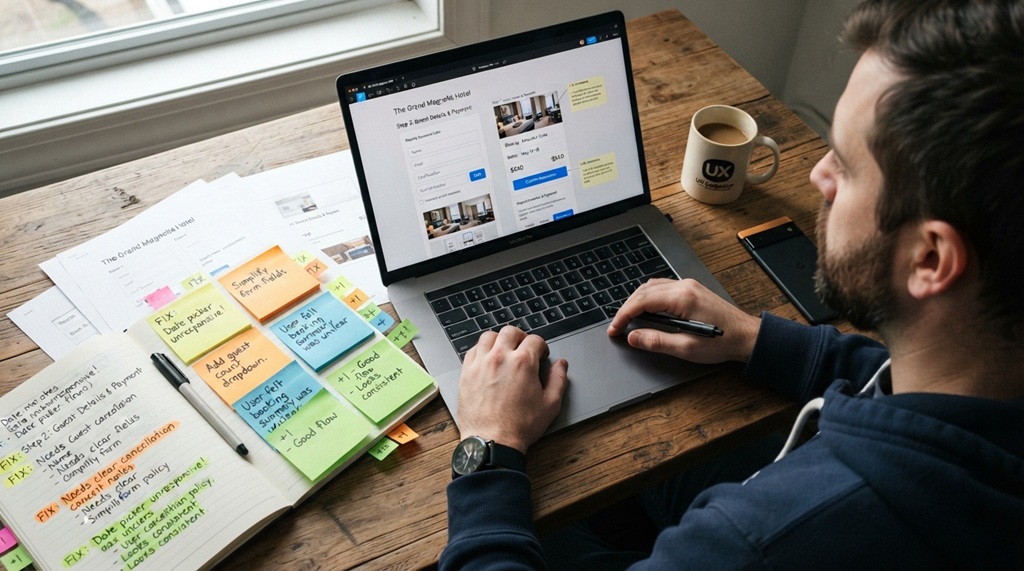
Conversion testing matters because it shows the real gap between interest and revenue. A hotel can get thousands of website visits a month and still convert poorly if the booking engine has friction points.
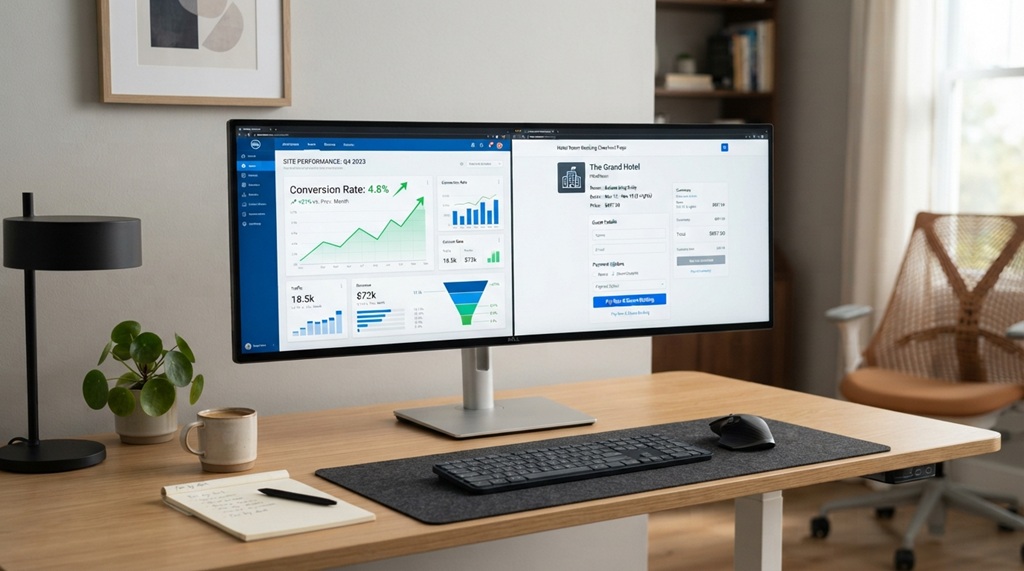
According to industry experts, hotel website conversion rates typically sit in the low single digits, often between 2% and 5%. That means for every 100 visitors, only a few actually complete a booking. Small improvements in that number produce a large impact on revenue, because you are not spending extra money on traffic. You are simply capturing more of the demand you already have.
Conversion testing also protects you from a common trap: assuming a slick design equals a working design. Booking engines can look modern and still fail at basic tasks, like showing accurate room availability or letting guests pay with their preferred method.
Set Clear Conversion Goals Before You Start Testing
Before testing anything, define what “conversion” means for your property. Without a clear goal, test results are hard to interpret and act on.
Define Your Primary and Micro-Conversions
Your primary conversion is a completed booking. But micro-conversions matter too, and they help you spot exactly where guests drop off.
- Visitor lands on the booking page
- Visitor selects dates and searches availability
- Visitor picks a room type
- Visitor enters guest details
- Visitor reaches the payment page
- Visitor completes payment
Track each step separately. This turns one vague question, “why aren’t we converting?”, into several specific ones you can actually answer.
Set a Benchmark You Can Measure Against
Pick a starting number before you change anything. Note your current conversion rate, average booking value, and cart abandonment rate. Without a baseline, you cannot prove whether a change actually helped.
Experience the Reservation Flow Through the Eyes of a Guest
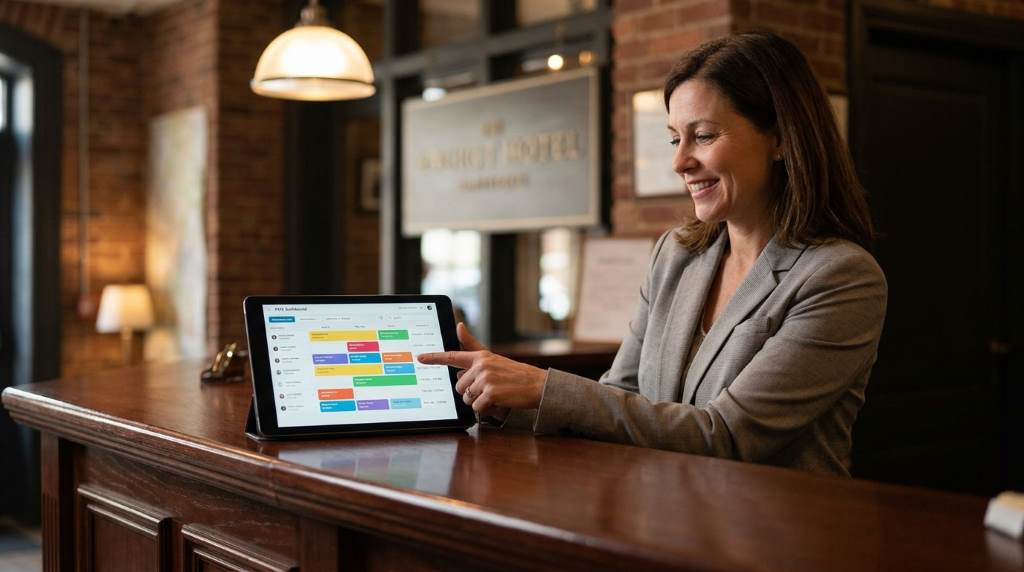
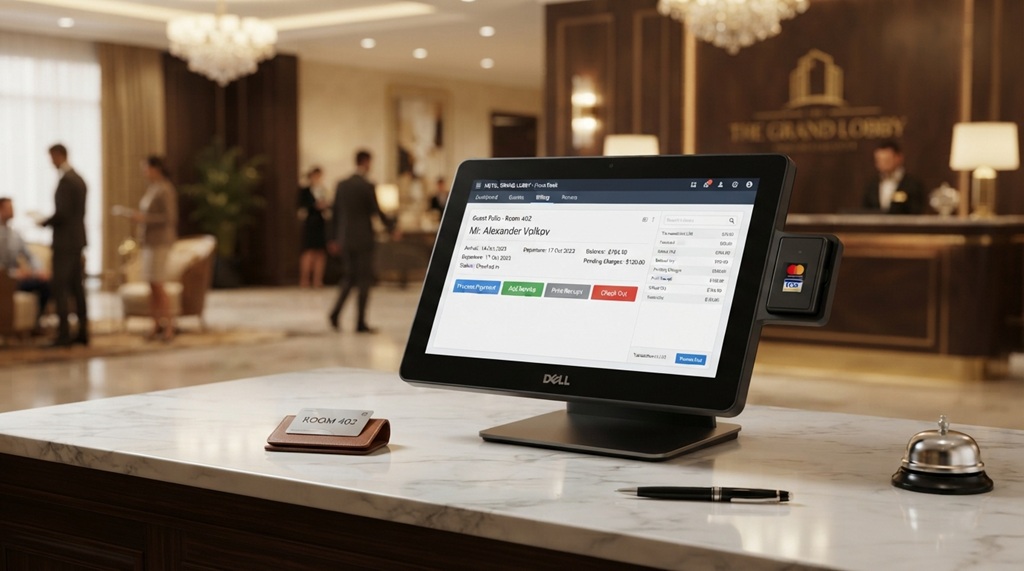
The most effective strategy for uncovering conversion friction is to personally navigate your reservation funnel across desktop, tablet, and mobile platforms, simulating a real traveler’s booking journey. Every extra step, slow load time, or ambiguous field can jeopardize direct revenue. To ensure high conversion rates translate directly into effortless operations, your digital checkout flow must integrate seamlessly with on-property payment infrastructures. Exploring how to choose the best hotel POS system allows you to align front-desk operations with online transactions, delivering a unified payment experience that builds guest trust from initial click to final check-out.
Run a Manual Walkthrough on Desktop and Mobile
Sit down and book a test reservation from start to finish. Do this on a laptop, a phone, and a tablet. Count the number of clicks it takes to go from landing page to confirmation.
Pay attention to:
- How many form fields you must fill in
- Whether the calendar is easy to use on a small screen
- Whether prices are shown clearly and early
- Whether you get interrupted by pop-ups or unclear steps
If a step confuses you, a guest with less patience will likely give up entirely.
Check Load Speed at Every Step
Slow pages kill conversions. According to Google’s own research, a delay of just a few seconds in mobile page load time can sharply increase the chance a visitor leaves. Use a free tool like Google PageSpeed Insights to test your booking engine’s speed on mobile and desktop separately, since mobile speed is often worse.
Test the Payment Process Specifically
Payment is where many bookings die. Test whether your engine accepts the payment methods your guests actually use, including local cards and digital wallets if you host international guests. Also test what happens when a card is declined. A confusing error message at this stage often means a lost booking, not a retry.
Use Analytics to Find Where Guests Are Dropping Off
A manual walkthrough tells you what a problem might be. Analytics tells you how often it actually happens.
Set Up Funnel Tracking
Most booking engines connect to Google Analytics 4 or offer their own reporting dashboard. Set up a funnel that mirrors the steps you defined earlier: landing page, search, room selection, guest details, payment, confirmation.
Look for the step with the biggest drop in visitors. That step is your priority. Fixing the highest drop-off point usually gives the fastest lift in bookings, faster than a full site redesign.
Segment Data by Device and Traffic Source
Don’t just look at overall numbers. Break your funnel down by mobile versus desktop, and by traffic source, such as direct visits versus paid ads versus email campaigns. A booking engine might convert well for desktop direct traffic but poorly for mobile visitors coming from a Facebook ad. This kind of detail tells you exactly where to focus your testing effort next.
Run A/B Tests on Specific Booking Engine Elements
Once you know where guests drop off, test small, specific changes rather than redesigning the whole flow at once.
Elements Worth Testing
Some of the highest-impact elements to A/B test include:
- Button text and color on the “Book Now” call to action
- Number of steps in the checkout process
- Placement of trust signals, like secure payment badges or guest reviews
- Whether prices are shown as “per night” or “total stay”
- Whether a phone number or live chat option appears during checkout
Test One Variable at a Time
Change one element per test. If you change the button color and the checkout steps at the same time, you won’t know which change actually caused the result. This slows testing down, but it gives you results you can trust and repeat.
A less obvious but genuinely useful tactic here: test your booking engine during a simulated “sold out” or “low availability” scenario, not just a normal search. Many properties never check how their engine handles urgency messaging, waitlists, or near-capacity dates, yet this is exactly when guests are most likely to hesitate or abandon. If your engine handles scarcity poorly, showing confusing dates or crashing under a rush of bookings during a sale, you’ll lose exactly the high-intent guests you worked hardest to attract.
Compare Your Booking Engine Against Industry Benchmarks
Testing in isolation only tells you part of the story. You also need to know how your numbers compare to similar properties.
Know What “Good” Looks Like
Conversion benchmarks vary by hotel type, location, and season, so treat any single number as a rough guide rather than a fixed target. Independent hotels and boutique properties often see different conversion patterns than large chain hotels with strong brand recognition, since brand trust plays a big role in whether a guest completes a booking without shopping around further.
Ask Your Booking Engine Vendor for Benchmark Data
Many booking engine providers track conversion data across their client base. Ask your vendor directly for anonymized benchmark reports. This gives you a more accurate comparison than general industry averages, since it reflects properties using the same technology as you.
Common Mistakes Hotels Make When Testing Booking Engines
Even well-intentioned testing efforts can go wrong. Here are mistakes worth avoiding.
Testing Too Many Things at Once
As mentioned in the A/B testing section, changing multiple elements together makes it impossible to know what worked. Slow down and test in a clear sequence.
Ignoring Repeat Guests and Loyalty Members
Repeat guests often behave differently from first-time visitors. If your booking engine has a loyalty login or member rate, test that flow separately. A friction point that barely affects new visitors might seriously frustrate a loyal guest who books with you every year.
Stopping After One Successful Test
Conversion testing isn’t a one-time project. Guest behavior shifts with the seasons, with new devices, and with changing expectations around speed and payment options. Build testing into your regular routine, not just a single sprint before a big campaign.
FAQ
What is a good conversion rate for a hotel booking engine?
Most hotel booking engines convert somewhere between 2% and 5% of visitors into completed bookings, according to industry experts. Boutique or high-demand properties can see higher rates, while budget or highly competitive markets may see lower ones. Use your own baseline as your true benchmark, since your property’s numbers matter more than a general average.
How often should I test my hotel’s booking engine?
Test major elements at least once a quarter, and run a full walkthrough any time you launch a new promotion or update your website. Guest expectations and mobile behavior shift over time, so a booking engine that converted well last year may need fresh testing today.
Can I test my booking engine without technical or IT support?
Yes. A manual walkthrough on desktop and mobile requires no technical skill, just patience and attention to detail. For deeper analytics and A/B testing, you may need help setting up tracking, but most booking engine vendors offer built-in reporting that doesn’t require coding.
Does mobile booking behavior differ from desktop?
Yes, significantly. Mobile visitors often browse and compare on their phones but sometimes complete the booking later on a desktop, especially for longer or more expensive stays. This is why segmenting your funnel data by device, as covered earlier, is one of the most useful steps in testing.
What’s the difference between website traffic and booking engine conversion?
Website traffic measures how many people visit your site, while conversion measures how many of those visitors actually complete a booking. A hotel can have strong traffic and weak conversion if the booking engine itself has friction, confusing steps, slow load times, or limited payment options.
Conclusion
Testing your hotel booking engine for conversion power comes down to three habits: walk through the booking process yourself, track where guests drop off using analytics, and test one change at a time to confirm what actually works. Skip the assumption that a good-looking booking engine automatically converts well. The properties that consistently win direct bookings are the ones that test regularly, measure honestly, and fix the smallest friction points before they become big revenue leaks.