Choosing the right hotel POS system comes down to three things: your property’s size, your existing tech stack, and how well the system connects with your PMS. Get these right, and you’ll speed up checkouts, cut billing mistakes, and give guests a smoother stay. Get them wrong, however, and you’ll end up paying for tools you never use.
So how do you find the right fit? This guide walks through exactly what to check. You’ll learn which features matter most, how to compare vendors, and which mistakes to avoid before you sign a contract.
Whether you run a small boutique hotel or a large resort, the steps below will help you pick a system that works today and grows with you tomorrow.
What Is a Hotel POS System and Why Does It Matter?
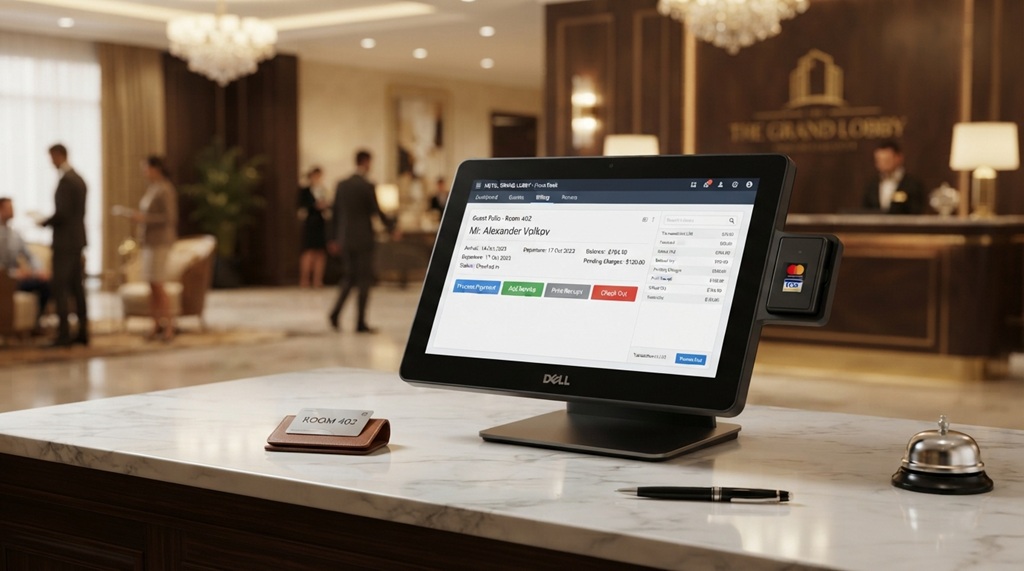
A hotel POS (point of sale) system processes payments and tracks sales across your property. This covers the front desk, restaurant, bar, spa, and gift shop.
A good POS does more than ring up sales, though. It links every department to one central system. As a result, a guest can charge a drink by the pool to their room, and that charge shows up right away on their bill. There’s no manual entry and no delay at checkout.
Without a proper POS, staff often fall back on separate systems or paper logs for each outlet. This leads to billing mistakes, slows down service, and makes daily revenue harder to track. In fact, industry experts point to disconnected systems as one of the most common causes of guest billing disputes in hotels.
Essential Features of an Enterprise Hotel POS System
When evaluating point-of-sale platforms, selecting hardware and software tailored specifically to hospitality workflows is vital to daily operational success. Modern hotel POS systems must extend far beyond basic transaction processing—they require seamless, two-way integration with your Property Management System (PMS) to enable real-time room folio charging, multi-outlet guest synchronization, and unified revenue reporting across food, beverage, and amenity services. Prioritizing features such as offline transaction processing, customizable floor plans, integrated contactless payments, and robust inventory analytics ensures your staff can deliver frictionless guest experiences while minimizing operational bottlenecks. Before committing to a full-scale hardware rollout, make sure to read guide on to review hotel management software before you buy to ensure complete compatibility across your property ecosystem.
PMS Integration
Your POS system should connect directly with your property management system, or PMS. This way, staff can post charges to guest rooms without switching screens or typing data twice.
Before you buy, ask vendors for a live demo of this connection. Some systems claim to “integrate,” but in reality they need manual exports and imports, which defeats the purpose.
Multi-Outlet Support
If you run a restaurant, bar, spa, or gift shop on-site, your POS needs to manage all of them from one dashboard. This gives you a single view of sales across the whole property.
Also, look for systems that let you set different prices, tax rules, and menus for each outlet. Some hotels, for instance, apply different tax rates to room service than to retail purchases.
Offline Mode
Internet outages happen, so a reliable POS should keep running offline and sync data once the connection returns. This matters most for properties in areas with weak internet, or during busy hours when networks slow down.
Reporting and Analytics
Your POS should produce real-time reports on sales, labor costs, and inventory. This way, you can spot patterns, such as which menu items sell best or which shifts run over budget.
Strong reporting also makes staffing and stock planning easier, since you work from real numbers instead of guesswork.
Mobile and Tableside Ordering
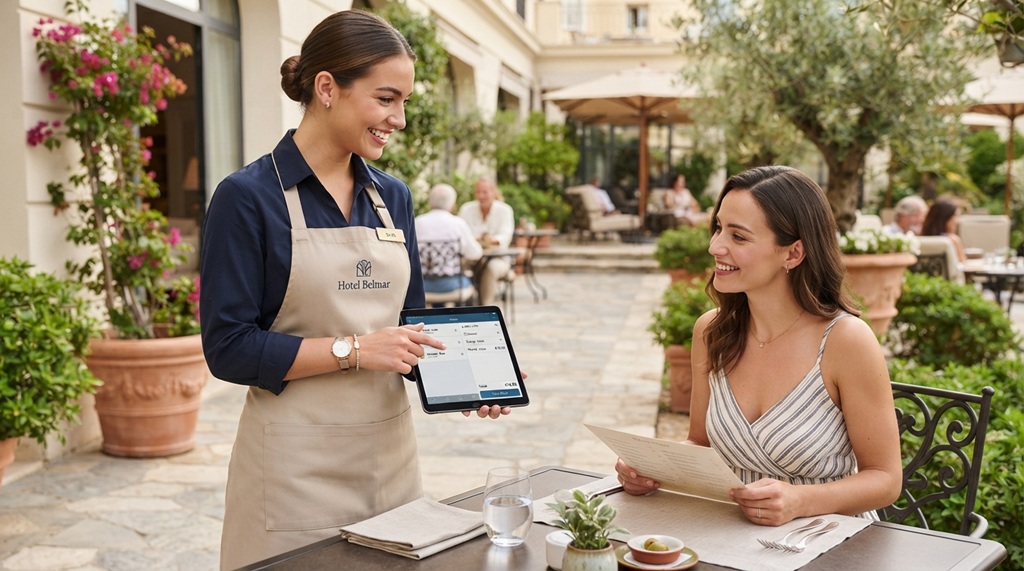
For restaurants and room service, mobile POS devices speed up order taking and cut down on mistakes. Instead of writing orders by hand, staff can send them straight to the kitchen from a handheld device.
How to Match a POS System to Your Property Type
Not every hotel needs the same setup. The right system depends on your size and the services you offer.
Small Boutique Hotels
Smaller properties usually need a simple system with strong front-desk and single-outlet support. Therefore, look for affordable, easy-to-learn software rather than a large platform packed with tools you won’t use.
Mid-Size Hotels with Multiple Outlets
If you run a restaurant, bar, and spa, put multi-outlet management and solid PMS integration first. Properties this size gain the most from central reporting, since revenue flows in from several departments at once.
Large Resorts and Chains
Bigger properties need systems built to scale, with support for multiple locations, complex tax rules, and detailed labor reports. Cloud-based platforms work well here, because they let managers review data across properties from a single dashboard.
Cloud-Based vs. On-Premise POS Systems
Cloud-based systems store data on remote servers and connect through the internet. On-premise systems, by contrast, run on local hardware at your property.
Cloud POS systems offer easier updates, remote access, and lower upfront hardware costs. For this reason, most new hotel POS platforms now default to cloud infrastructure.
On-premise systems, however, can offer more control over data and may work better in areas with shaky internet. They usually cost more to maintain, though, and need on-site IT support.
Overall, cloud-based systems offer the better balance of cost and flexibility for most properties. Still, on-premise setups make sense for large resorts with dedicated IT teams and strict data rules.
What Hotel POS Systems Really Cost (and What to Watch For)
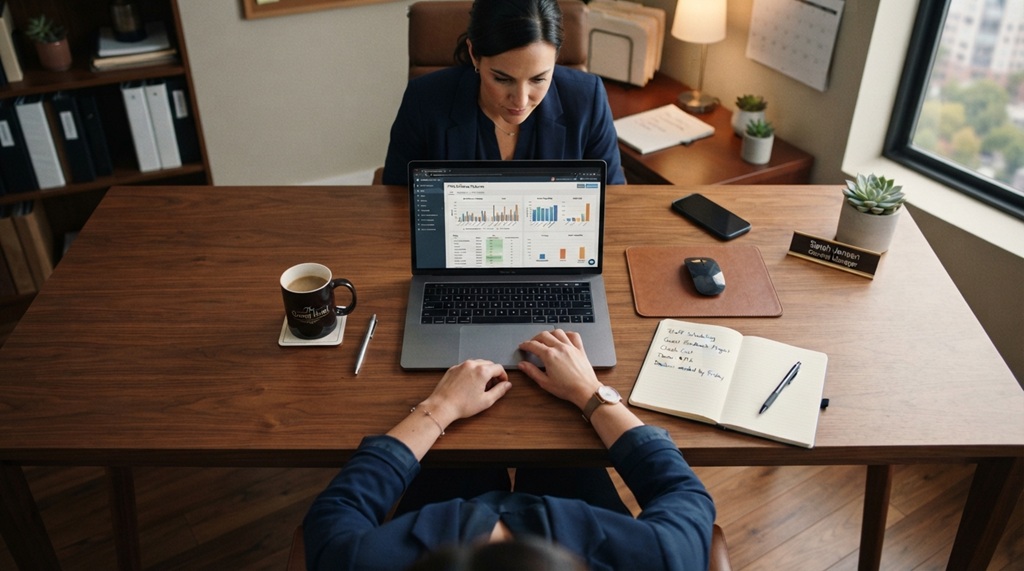
Most vendors price hotel POS systems one of three ways: a flat monthly fee, a per-terminal fee, or a percentage of transactions processed. Costs vary widely depending on property size and outlet count.
Here’s something many buyers miss, though: the sticker price rarely tells the full story. Before you sign anything, ask vendors directly about these often-hidden charges:
- Setup and installation fees
- Hardware costs, such as terminals, card readers, and printers
- Training fees for staff
- Charges for adding new outlets or terminals later
- Support and maintenance fees after the first year
Ask for a full cost breakdown in writing before you commit. Otherwise, a system that looks cheap upfront can end up costing far more once these extras stack up.
Questions to Ask Before You Sign a Contract
Before you commit to a vendor, walk through these questions with your team.
- Does this system connect directly with our current PMS? Confirm this with a live demo, not just a sales pitch.
- What happens if the internet goes down? Ask specifically about offline mode and how data syncs once service returns.
- How long does staff training take? Faster onboarding means less disruption during the switch.
- What’s included in the support contract? Find out whether support runs 24/7 and if it costs extra after year one.
- Can the system grow with us? If you plan to add outlets or locations, confirm the system can scale without a full replacement.
Getting clear answers now saves you from costly surprises later.
Frequently Asked Questions
What is the best POS system for a small hotel?
The best POS system for a small hotel offers simple front-desk tools and strong single-outlet support. Look for fair pricing and quick staff training instead of large-scale features you may never need. Cloud-based systems are usually the easier and cheaper starting point for smaller properties.
How much does a hotel POS system cost?
Hotel POS systems typically charge a monthly fee, a per-terminal fee, or a percentage of transactions. Total cost depends on your property size, outlet count, and any added hardware. Always ask for a full breakdown, since setup, training, and support fees often raise the base price.
Can a hotel POS system work without internet?
Yes, most modern hotel POS systems include an offline mode. They store transactions locally and sync automatically once the connection returns. This feature matters most for properties in areas with unreliable internet.
Do I need a separate POS system for my hotel restaurant?
Not necessarily, since most modern hotel POS platforms support multiple outlets, including restaurants, bars, and spas, from a single system. This means restaurant charges can post directly to a guest’s room bill without switching software.
How long does it take to switch to a new hotel POS system?
Switching typically takes anywhere from a few days to a few weeks, depending on property size and staff training needs. Cloud-based systems generally install faster than on-premise setups. For this reason, plan the switch during a slower season to reduce disruption for guests and staff.
Final Thoughts
Choosing the best hotel POS system starts with knowing your property’s specific needs, not just picking the most popular option. Focus first on PMS integration, multi-outlet support, and clear pricing, since these three factors shape daily operations more than any flashy feature list.
Take time to request live demos, ask vendors detailed cost questions, and bring your front-desk and F&B staff into the decision. After all, the right system should make their jobs easier, not harder. In the end, a well-matched POS system pays for itself through faster service, fewer billing mistakes, and better guest experiences.