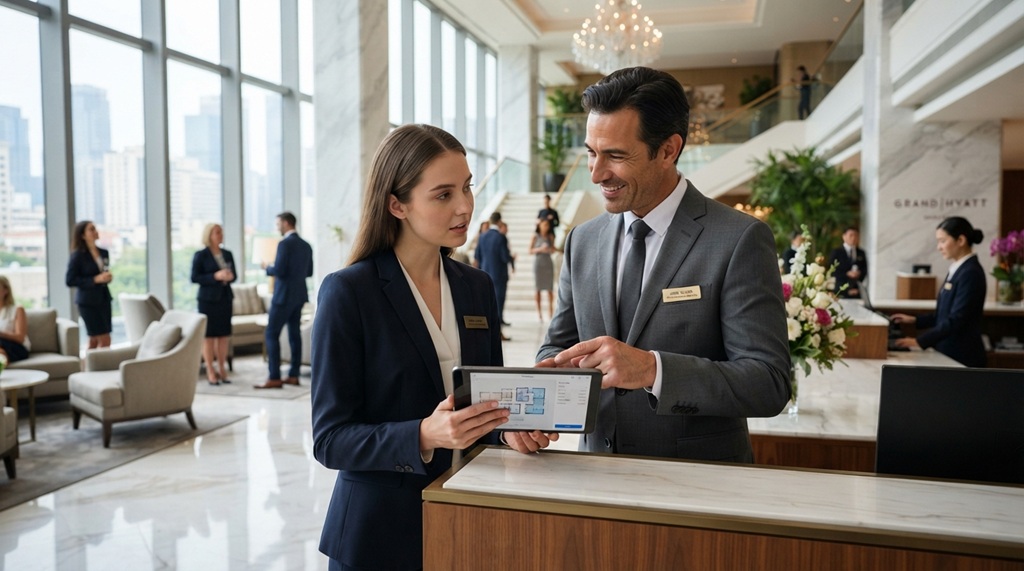
You build a strong hotel leadership team from within by identifying high-potential staff early, training them across departments, and giving them real decision-making experience before you promote them. This approach costs less than external hiring. It also protects your service culture, because internal leaders already understand your guests and your standards.
Hotels lose a lot when they promote too fast or hire only from outside. New leaders from other properties need months to learn your systems. Meanwhile, your best front-line staff watch outsiders take the roles they wanted. Many leave. This article breaks down a practical, step-by-step way to grow leaders from your own team, so you keep talent and build a management bench that actually understands your operation.
We will cover how to spot potential early, how to structure training, how to avoid common promotion mistakes, and how to keep your new leaders once you have built them.
Why Internal Promotion Builds Stronger Hotel Leaders

Internal promotion works because it rewards people who already know your property, your team, and your guests. A front-desk agent who becomes a front office manager does not need to learn your PMS software or your check-in flow. She already knows both.
According to industry experts, replacing a manager costs far more than developing one internally, once you count recruiting fees, onboarding time, and lost productivity during the transition. Internal candidates also ramp up faster. They skip the “learning the property” phase that external hires need.
There is a cultural benefit too. When staff see a housekeeper become an executive housekeeper, or a bartender become an F&B manager, it sends a clear message: growth is possible here. That message alone reduces turnover, because people stay when they can see a path forward.
Nurturing Talent to Drive Long-Term Retention
When employees clearly envision a long-term career path within your property, turnover drops precipitously. Prioritizing internal promotions transforms demanding seasonal shifts into meaningful professional milestones, turning routine roles into rewarding careers. Establishing this culture of growth starts on the front lines; mastering foundational operational excellence such as knowing how to train hotel housekeeping staff for peak efficiency builds a resilient, highly capable talent pipeline ready to step into leadership.
How to Identify Future Leaders on Your Current Team
You identify future leaders by watching how staff handle pressure, how they treat coworkers, and whether they take initiative without being asked. Skills can be taught. Attitude and judgment are much harder to teach.
Look for these signals during daily operations, not just during formal reviews:
- They calmly solve guest problems without escalating every issue to a manager.
- They help train new hires, even when it is not their job.
- They speak up in team meetings with useful suggestions.
- They stay composed during a busy shift or a service failure.
- Coworkers naturally go to them with questions.
Use Structured Observation, Not Just Gut Feeling
Gut feeling misses people who are quiet but reliable. Set up a simple tracking system instead. Ask department heads to note specific examples of strong judgment or initiative each month, even a few sentences per employee. Review these notes quarterly. Patterns will show you who is ready for more responsibility, and who is not yet ready, well before a position opens up.
Building a Cross-Training Program That Prepares Staff for Leadership
Cross-training prepares future leaders by giving them a working knowledge of departments beyond their own. A great general manager understands housekeeping timelines, F&B costs, and front desk pressure points. That understanding only comes from hands-on exposure.
Start small. Let a promising front desk agent shadow the night audit process for a shift. Let a server spend a day learning banquet event orders. These short exposures build context that pays off later, when that person has to make decisions that affect multiple departments.
Structuring a Rotation Schedule
A basic rotation program works like this:
- Identify two or three high-potential employees per department.
- Pair each one with a mentor in a different department for a half-day shadow session, once a month.
- Rotate the pairing every quarter so employees see more of the property over a year.
- Ask each participant to write a short summary of what they learned after each session.
This does not need a big budget. It needs a schedule and a commitment to protect that time, even during busy periods.
Creating Clear Promotion Paths and Career Ladders
A clear promotion path shows staff exactly what skills and experience they need for the next role. Without this, ambitious employees guess, and many guess wrong, or give up and leave for a property that offers a clearer path.
Build a simple career ladder for each department. For example, a front office ladder might look like this: guest service agent, shift lead, assistant front office manager, front office manager. Write down what each step requires, both in skills and in time on the job.
What to Include in a Career Ladder Document
- The typical skills required for each level
- Any certifications or training modules tied to that level
- Rough timeframes (not guarantees) for how long people usually spend at each level
- Who to talk to about pursuing the next step
Share this document during onboarding and during annual reviews. Employees who can see the path are far more likely to stay and work toward it.
Mentorship: The Missing Piece Most Hotels Skip
Mentorship turns potential into performance by pairing rising staff with experienced leaders who can guide real decisions, not just teach theory. Many hotels train technical skills well. Few build real mentorship relationships, and this is where a lot of internal promotion programs quietly fail.
A good mentor does three things. First, she gives honest feedback, including the uncomfortable kind. Second, she includes her mentee in real decisions, like budget reviews or scheduling conflicts, so the mentee learns by doing. Third, she stays available between formal check-ins, not just during scheduled meetings.
One Angle Most Articles Miss: Reverse Mentorship
Most advice on hotel leadership talks about senior staff mentoring junior staff. Fewer hotels use reverse mentorship, where a younger or newer employee teaches a senior leader something they do not know, such as a new booking platform, a social media trend, or a guest expectation shaped by newer travel habits. This builds mutual respect and often reveals leadership qualities in junior staff that would otherwise go unnoticed. It also keeps senior leaders sharper and more connected to how younger guests and younger staff actually think.
Common Mistakes Hotels Make When Promoting From Within
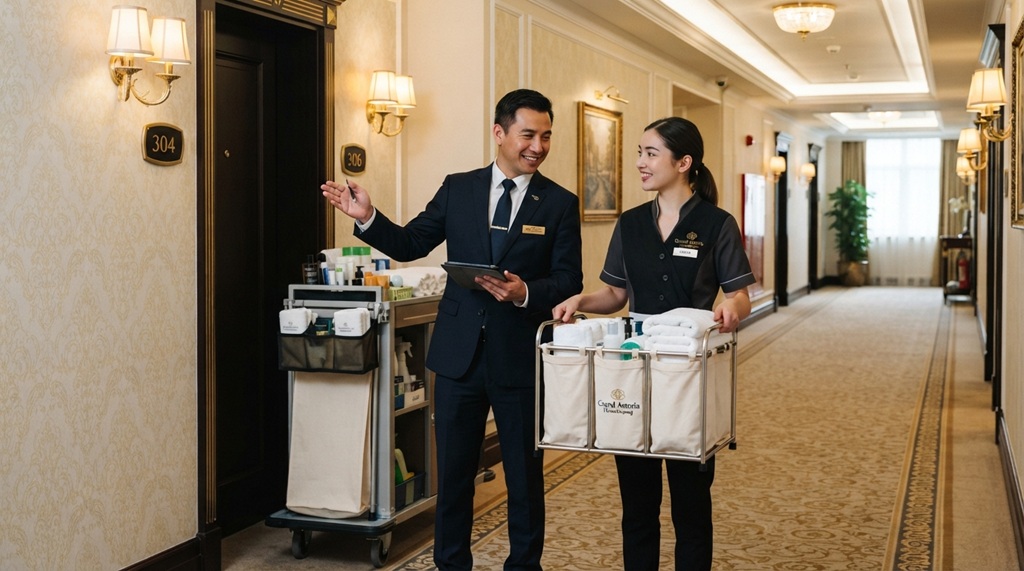
The biggest mistake is promoting someone for being good at their current job, without checking whether they actually want to lead people or have the skills to do it. A great housekeeper is not automatically a great housekeeping supervisor. Leadership requires a different skill set: delegation, conflict resolution, and budget awareness.
Other common mistakes include:
- Promoting too fast, without giving the person time to build the skills the new role needs.
- Skipping leadership training, and assuming the person will “figure it out.”
- Failing to adjust pay and title together, which signals that the promotion is not taken seriously.
- Not removing old responsibilities, so the new leader is stuck doing two jobs at once.
- Ignoring team dynamics, when a peer is promoted to manage former coworkers, without any support for that transition.
How to Support a New Leader in Their First 90 Days
The first three months set the tone for a new leader’s entire tenure. Schedule weekly check-ins during this period, not just a single 30-day review. Ask specific questions: What decision did you find hardest this week? What would help you right now? Small, consistent support in this window prevents burnout and builds confidence fast.
How to Retain the Leaders You Build
You retain the leaders you develop by continuing to invest in them after the promotion, not just before it. Many hotels stop supporting employees the moment they get the new title, which is exactly the wrong time to stop.
Keep offering growth opportunities, even small ones: a conference, a cross-property project, a seat at a bigger planning meeting. Check in regularly about workload and stress, since new leaders often take on more than they should out of a desire to prove themselves. Pay competitively and review compensation as their responsibilities grow, not just on a fixed annual schedule.
Finally, ask your new leaders what they need. A short, honest conversation every quarter often prevents the kind of quiet frustration that leads a strong manager to start looking elsewhere.
Frequently Asked Questions
How long does it take to build a hotel leadership team from within?
Most hotels see meaningful results within twelve to eighteen months of starting a structured program. Building trust, cross-training staff, and giving them real decision-making experience all take time. Rushing the process usually produces underprepared leaders who struggle once promoted.
Should small, independent hotels build internal leadership programs too?
Yes. Small hotels benefit even more, since they usually cannot compete with large chains on salary alone. A clear growth path and real mentorship can be a stronger recruiting and retention tool than pay for many candidates.
What if a strong employee does not want to become a manager?
Not everyone wants to lead people, and that is fine. Offer a “specialist” track instead, where the employee deepens expertise in their current role and earns more responsibility and pay without managing a team.
How do we handle it when a promoted employee now manages former peers?
Address it directly and early. Give the new manager basic training on setting boundaries with former coworkers, and have a senior leader check in with the team to support the transition on both sides.
What is the difference between cross-training and job shadowing?
Cross-training gives an employee hands-on practice in another department’s tasks, while shadowing means observing someone else do their job without performing the tasks yourself. Strong leadership programs use both, starting with shadowing and moving toward real cross-training over time.
Conclusion
Building a strong hotel leadership team from within takes intention, not luck. Spot potential early, cross-train across departments, build clear promotion paths, and back new leaders with real mentorship, especially in their first 90 days. Hotels that commit to this approach end up with managers who understand their property deeply and staff who believe there is a real future for them on the team. That combination is hard for any competitor to poach away.


