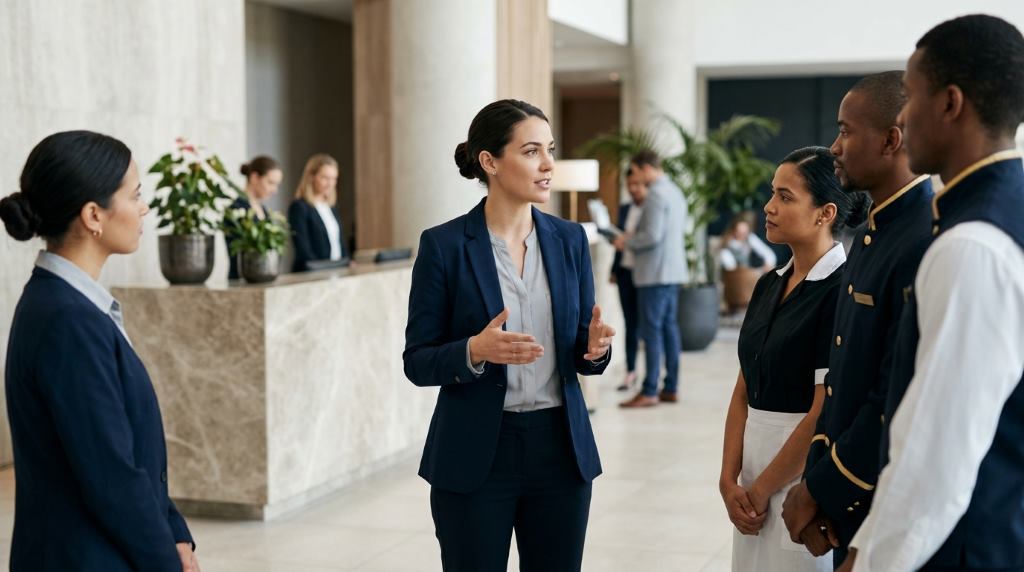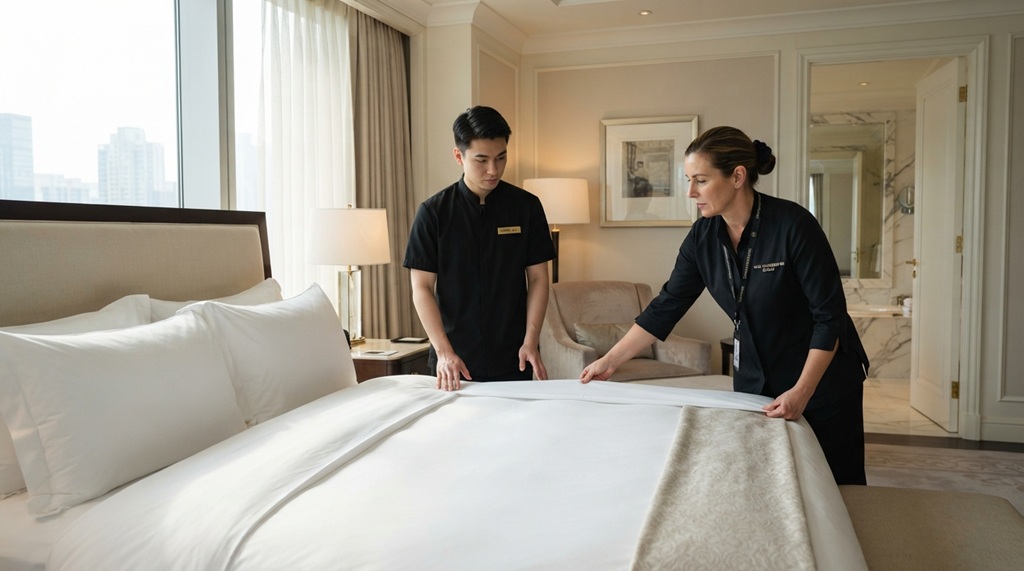
Training hotel housekeeping staff for peak efficiency means combining clear standard operating procedures, hands-on practice, and the right tools. Do this, and rooms get cleaned faster, guest satisfaction scores rise, and staff turnover drops. This isn’t about rushing people. It’s about removing wasted motion and confusion from the cleaning process.
Most hotels lose time not because staff are slow, but because training is inconsistent. One housekeeper learns from a senior colleague. Another learns from a manual nobody reads. The result? Uneven room quality and unpredictable turnaround times.
This guide breaks down a practical system you can use to train your housekeeping team. It covers onboarding, room-cleaning techniques, time management, and technology. Each section stands on its own, so you can jump to what you need most right now.
Why Housekeeping Efficiency Directly Impacts Hotel Revenue
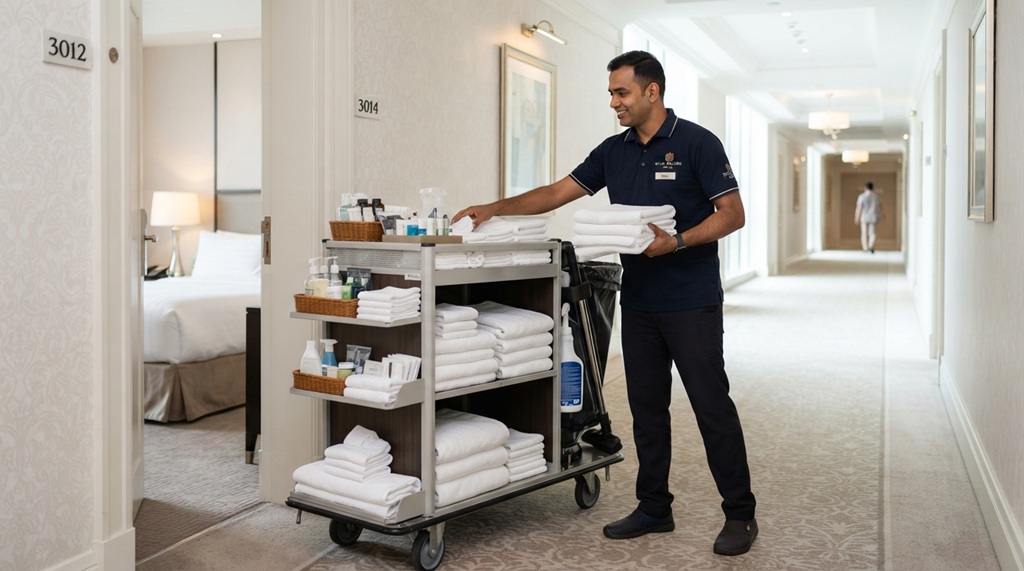
Housekeeping speed and quality affect your bottom line more than most managers realize. Slow room turnover delays check-ins, frustrates guests, and can even cost you same-day bookings during high-occupancy periods.
Every extra minute spent cleaning a room adds up. A property with 100 rooms and even a five-minute delay per room loses over eight hours of staff time daily. That time could go toward deep cleaning, guest requests, or additional rooms.
Guest reviews also hinge on cleanliness. Industry experts consistently rank cleanliness as one of the top three factors guests mention in online reviews. A well-trained housekeeping team protects your reputation as much as your revenue.
Building a Structured Onboarding Program
A structured onboarding program gives new housekeeping staff a clear path from day one, instead of learning by trial and error on the job.
Start With Role-Specific Orientation
New hires need more than a tour of the property. They need to understand your brand standards, safety protocols, and the specific expectations for each room type. Spend the first day walking through sample rooms together, pointing out exactly what “clean” means at your property.
Pair New Staff With Experienced Mentors
Shadowing works better than lectures. Pair each new housekeeper with a trained staff member for the first week. Let the new hire clean rooms while the mentor observes and corrects technique in real time. This builds muscle memory faster than any manual.
Set Clear 30-60-90 Day Milestones
Give new staff measurable goals. By day 30, they should clean rooms independently at 80% of standard speed. By day 60, they should hit full speed with consistent quality. By day 90, they should train others. Clear milestones reduce anxiety and give managers an easy way to track progress.
Standardizing Room Cleaning Procedures
Standardized procedures ensure every room meets the same quality bar, regardless of who cleans it.
Create a Room-by-Room Checklist
Break the cleaning process into a fixed sequence: strip beds, dust, clean bathroom, vacuum, restock amenities, final inspection. A written checklist removes guesswork and helps staff move through rooms without missing steps or backtracking.
Time Each Task Segment
Don’t just set a total room-cleaning time. Break it down by task. For example, allow eight minutes for the bathroom, six minutes for bed-making, and five minutes for dusting and vacuuming. This helps staff identify exactly where they’re losing time.
Standardized Room Cleaning Routes
Implementing a standardized cleaning route across every guest room eliminates decision fatigue, ensures no detail is overlooked, and directly translates consistent movement into peak operational speed. By training staff to follow a precise physical order such as entering the doorway and systematically working clockwise around the space housekeepers move with intuitive efficiency rather than second-guessing their next step. Mastering these streamlined daily workflows not only elevates room presentation but also boosts job satisfaction and morale; for broader strategies on maintaining high performance while building a resilient team, explore our insights on how to reduce hotel staff turnover and keep talent long-term.
Teaching Time Management Without Sacrificing Quality
Speed training only works if quality doesn’t slip. The goal is to remove wasted motion, not to rush through tasks.
Group similar tasks together. Have staff carry all bathroom supplies in one trip instead of walking back to the cart multiple times. Small changes like this save several minutes per room without changing the actual cleaning steps.
Use a buddy check system during the first month. Have a supervisor spot-check five rooms per shift against the checklist. This catches shortcuts before they become bad habits, and it gives staff quick feedback while the room is still fresh in their memory.
A tip most training guides skip
Track individual task times, not just total room times. If two housekeepers both average 25 minutes per room, but one spends 12 minutes on the bathroom and the other spends 6, you have very different training needs hiding behind the same average. Task-level data tells you exactly where to focus coaching.
Using Technology to Support Housekeeping Training
Technology can reinforce training and reduce the burden on supervisors, though it should never fully replace hands-on coaching.
Mobile Checklists and Task Apps
Many hotels now use housekeeping management software that pushes room assignments and checklists directly to staff phones. This cuts down on paper waste and gives managers real-time visibility into which rooms are done, in progress, or flagged for issues.
Video Training Modules
Short video clips showing correct bed-making, bathroom sanitizing, or amenity placement give staff a reference they can watch anytime. This is especially useful for seasonal hires who need fast onboarding without pulling a trainer away from daily operations.
Digital Inspection Tools
Supervisors can use tablet-based inspection forms with photo evidence to document room quality. This creates a training record over time, showing which staff need more coaching and which rooms consistently pass inspection on the first try.
Motivating Staff to Maintain Speed and Quality Long-Term
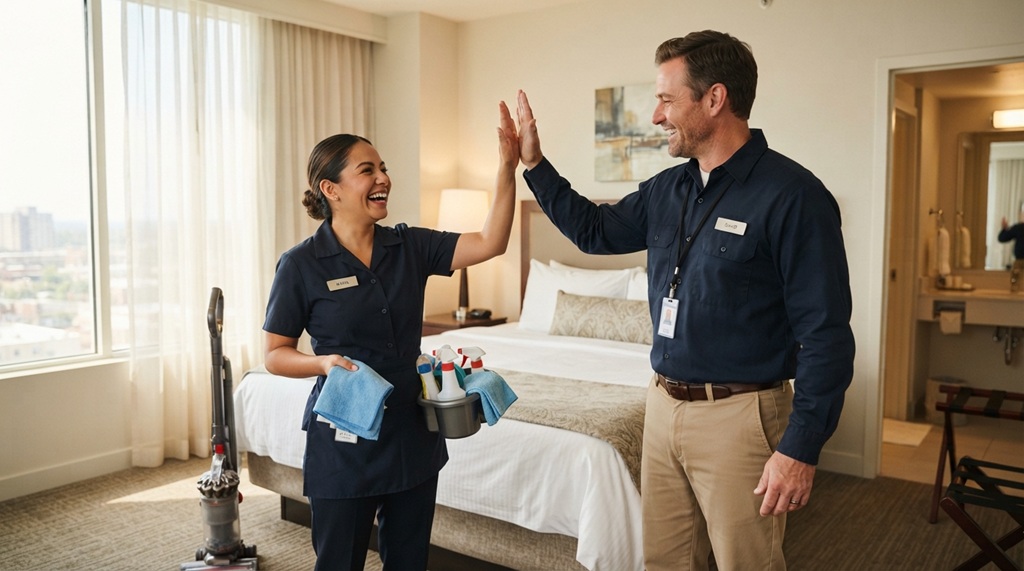
Training only sticks when staff stay motivated to follow it. Recognition and fair workload distribution matter as much as the initial training itself.
Recognize top performers publicly, even with something as simple as a monthly shoutout board. Housekeeping is often an invisible job. Staff who feel seen tend to maintain higher standards without constant supervision.
Rotate difficult assignments fairly. If one housekeeper always gets the largest suites or the messiest checkouts, resentment builds and speed drops. A fair rotation system keeps morale steady across the team.
Offer a clear path to advancement. Housekeepers who know they can become team leads or trainers tend to invest more effort into mastering the standard procedures you’ve taught them.
Measuring Training Success With the Right Metrics
You can’t improve what you don’t measure. Track a small set of clear metrics to know whether your training is actually working.
- Average room cleaning time, tracked weekly per staff member
- Inspection pass rate on the first check, not after corrections
- Guest complaint rate related to cleanliness, pulled from review data
- Staff retention rate within the first 90 days of employment
Review these numbers monthly with your housekeeping supervisors. If cleaning times are dropping but inspection pass rates are also dropping, that’s a warning sign staff are sacrificing quality for speed. Adjust training focus accordingly.
Frequently Asked Questions
How long should it take to train a new housekeeper to full speed?
Most hotels see new housekeepers reach full speed within 60 to 90 days, depending on room complexity and property size. Structured onboarding with mentorship tends to shorten this timeline compared to informal, on-the-job training alone.
What is a good average cleaning time per room?
Industry experts often cite 25 to 30 minutes per standard room as a reasonable benchmark, though this varies by room size, hotel category, and turnover versus stay-over cleaning. Track your own property’s baseline first, then aim to improve it gradually.
Should housekeeping training be different for luxury hotels versus budget hotels?
Yes, luxury properties typically require more detailed training on presentation, such as precise linen folds and amenity placement, which takes more time per room. Budget hotels usually prioritize speed and consistency over intricate detailing, so training focuses more on efficient routines.
How often should housekeeping staff receive refresher training?
Quarterly refresher sessions work well for most properties, especially after introducing new cleaning products, room layouts, or brand standards. Refreshers also give supervisors a chance to catch bad habits before they spread across the team.
Can technology really improve housekeeping training outcomes?
Yes, tools like mobile checklists and digital inspection forms give supervisors real-time data they wouldn’t otherwise have. However, technology works best as a support system alongside hands-on coaching, not as a replacement for it.
Conclusion
Training hotel housekeeping staff for peak efficiency comes down to four things: structured onboarding, standardized procedures, ongoing measurement, and genuine staff motivation. None of these require a large budget. They require consistency and a willingness to track what’s actually happening room by room. Start with one section of this guide, whether it’s building a checklist or setting up task-level time tracking, and expand from there as your team adjusts.