Guests now expect hotels to feel as smart as their own homes. To adopt smart hotel tech, start with the tools guests notice first: mobile check-in, in-room controls, and personalized service powered by data. From there, you can layer in automation and AI to run your property more efficiently.
This shift is not just about gadgets. It is about removing friction from the guest journey and freeing your staff to focus on real hospitality. Hotels that get this right see higher satisfaction scores and stronger repeat bookings.
Below, we break down exactly which technologies matter most in 2026, how to roll them out without overwhelming your team, and how to avoid the most common adoption mistakes.
Why Smart Hotel Technology Matters Right Now
Smart hotel technology matters now because guest expectations have changed faster than most properties have. Travelers who use smart speakers, keyless entry, and app-based everything at home expect the same convenience on the road.
According to industry experts, hotels that adopt contactless and mobile-first technology tend to see improved guest satisfaction and stronger online reviews. Guests notice when a hotel feels outdated compared to their daily life. That gap shapes their perception of your entire brand.
There is also a staffing angle. Many hotels struggle to hire and retain front-desk and housekeeping staff. Smart technology does not replace your team. It removes repetitive tasks so your team can spend more time on guest interactions that actually need a human touch.
Seamless Mobile Check-In & Keyless Room Access
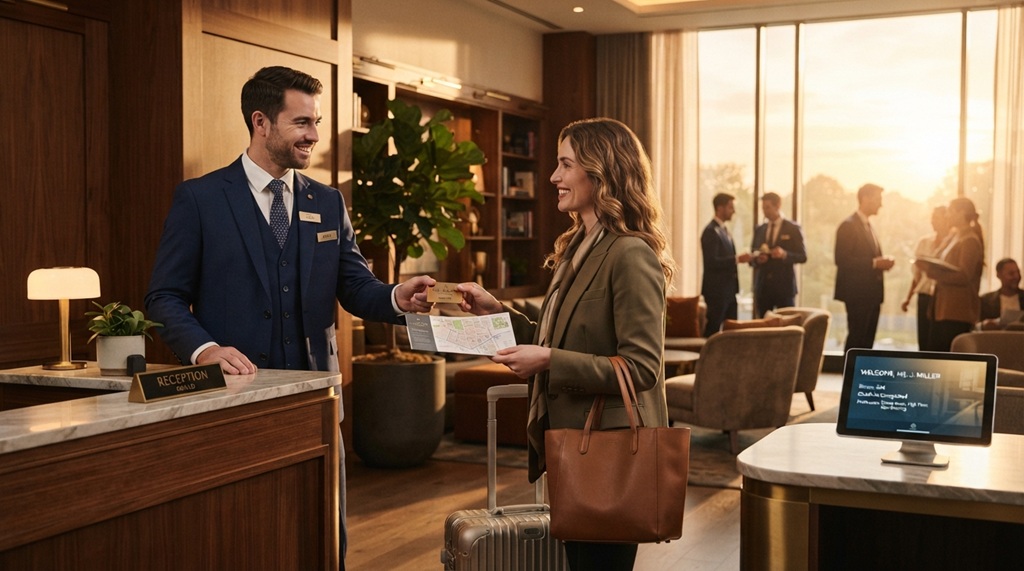
By empowering guests to bypass the front desk entirely and proceed straight to their rooms via smartphone credentials, mobile check-in dramatically elevates first impressions a vital touchpoint for late arrivals and time-pressed business travelers. Integrating this automated check-in process with smart room controls streamlines modern operations while naturally aligning with strategies on boost hotel eco-friendly practices to win guests, delivering a frictionless, high-tech experience that reduces plastic waste and appeals to eco-conscious consumers.
How It Works in Practice
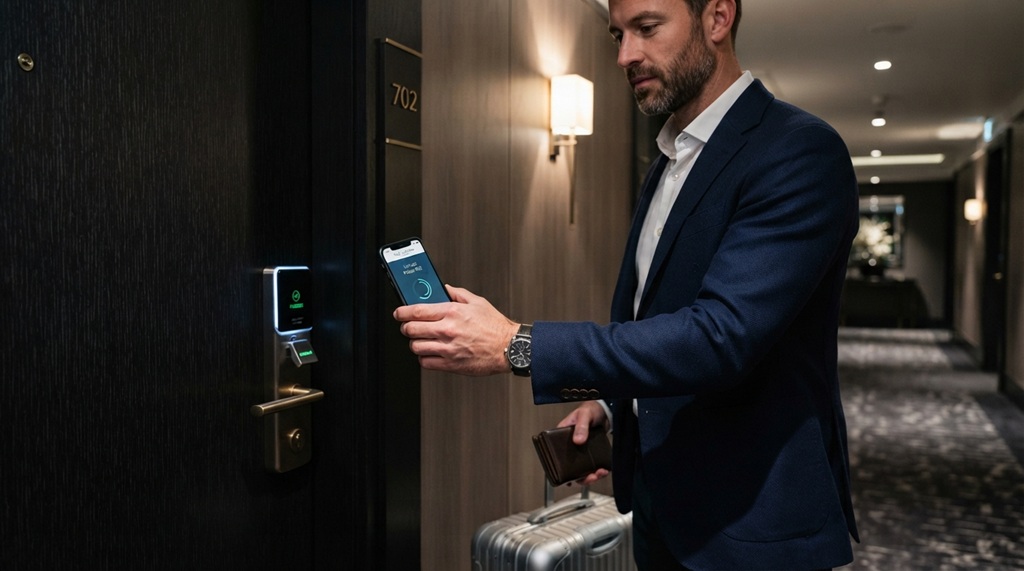
Guests receive a digital key on their phone before arrival. They unlock their room with a tap, no plastic keycard required. Most property management systems (PMS) now integrate with digital key providers, so this does not require a separate platform.
What to Watch For During Rollout
Do not remove your front desk option when you launch mobile check-in. Some guests, especially older travelers, still prefer speaking to a person. Offer both paths and let guests choose. Train staff to explain the mobile option briefly at booking confirmation, not as a forced switch.
In-Room Smart Devices Guests Actually Want
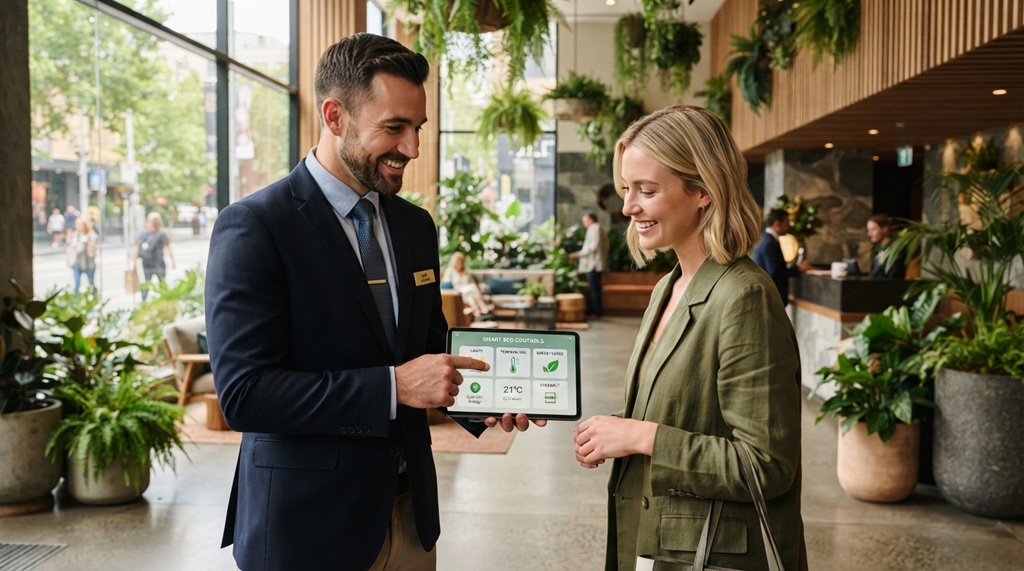
Guests want in-room smart devices that solve a real problem, not gadgets added for the sake of looking modern. The three most requested features are smart thermostats, voice-controlled lighting, and app-based room service ordering.
Smart thermostats let guests set their preferred temperature before they even arrive, based on past stays. This small detail creates a strong first impression when guests walk into a room that already feels right.
Voice assistants in guest rooms can control lights, curtains, and temperature, and can also answer simple questions like “what time is checkout.” Many hotels now use privacy-focused, hotel-branded voice assistants instead of consumer smart speakers, which better protects guest data and matches your brand voice.
One angle many hotels overlook: sync your in-room tech with your loyalty program. If a returning guest’s preferred temperature, lighting, and even pillow type are already set when they enter the room, that level of personalization is what actually drives repeat bookings, more than any single gadget on its own.
AI-Powered Guest Communication and Chatbots
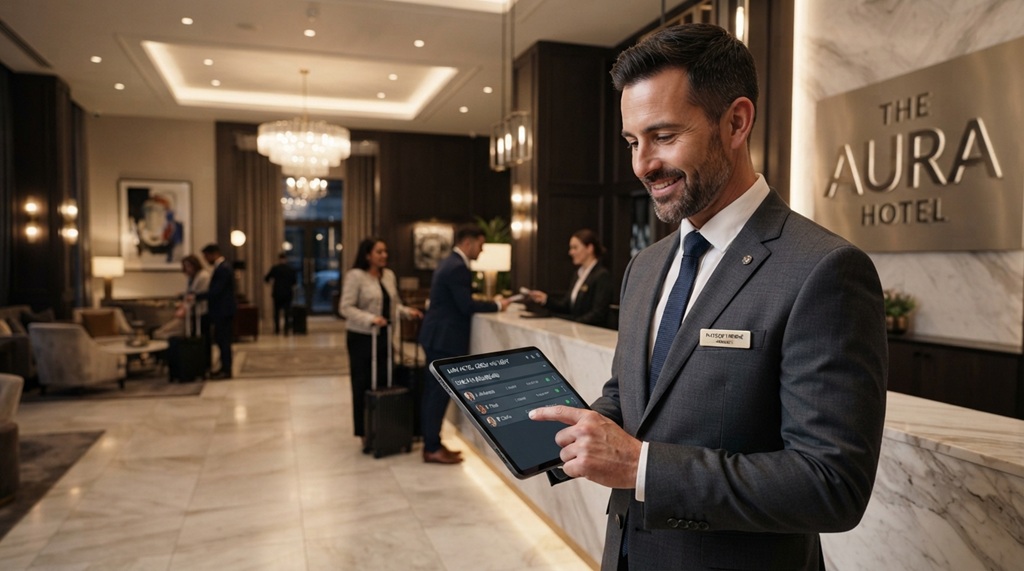
AI chatbots handle the repetitive guest questions your front desk answers dozens of times a day, like Wi-Fi passwords, checkout times, and local recommendations. This frees your staff to focus on requests that need real judgment or a personal touch.
Where Chatbots Work Best
Chatbots perform well for pre-arrival questions, simple service requests, and 24/7 support when your front desk is short-staffed overnight. Guests get instant answers instead of waiting on hold or for an email reply.
Where Human Staff Should Stay Involved
Complaints, special occasions, and anything emotionally sensitive should always route to a real staff member. A chatbot that tries to handle a guest complaint about a noisy room will usually make the guest more frustrated, not less. Set clear escalation rules so the AI knows when to step aside.
Energy Management and Smart Room Sensors
Smart room sensors cut energy costs by automatically adjusting heating, cooling, and lighting based on whether a room is occupied. This is one of the fastest ways smart technology pays for itself, since energy is one of a hotel’s largest operating costs.
Occupancy sensors detect when a guest leaves the room and adjust the thermostat within minutes. Some systems also alert housekeeping automatically once a guest checks out, which speeds up room turnover during busy check-in periods.
Beyond cost savings, energy-efficient technology has become a booking factor for a growing number of travelers. Many guests now filter hotel searches by sustainability credentials, so visible smart-energy features can influence booking decisions, not just your utility bill.
Data Privacy and Cybersecurity Considerations
Guest data collected through smart technology must be protected with the same seriousness as payment information. Every connected device in your hotel, from smart TVs to voice assistants, is a potential entry point for a data breach if it is not properly secured.
Work with vendors who are transparent about how guest data is stored and encrypted. Ask direct questions before signing any contract: where is the data stored, who has access to it, and how long is it retained after a guest checks out?
Train your staff on basic cybersecurity habits too. Weak passwords on staff devices are still one of the most common ways hotel systems get breached, regardless of how advanced your guest-facing technology is.
A Practical Rollout Plan for Any Hotel Size
You do not need a large tech budget to start adopting smart hotel technology. Begin with one guest-facing improvement, measure the impact, and expand from there based on what guests actually respond to.
Step 1: Audit Your Current Guest Journey
Map out every touchpoint from booking to checkout. Identify where guests currently experience friction or delays. This tells you exactly where technology will have the most impact, instead of guessing.
Step 2: Start With One High-Impact Change
Pick a single feature, like mobile check-in or a smart thermostat pilot in a few rooms. Test it for 60 to 90 days and gather direct guest feedback through post-stay surveys.
Step 3: Train Staff Before You Launch
Staff should understand the new technology well enough to explain it to guests confidently. A confused staff member creates a worse impression than having no new technology at all.
Step 4: Expand Based on Real Data
Use booking patterns, survey scores, and staff feedback to decide what to roll out next. Let guest response guide your next investment instead of following every new trend you read about.
Frequently Asked Questions
What is the easiest smart hotel technology to start with?
Mobile check-in and digital key access are usually the easiest starting points. They integrate with most existing property management systems and require minimal hardware changes, making them a low-risk first step for hotels of any size.
Does smart hotel technology reduce the need for staff?
No, it shifts staff time toward higher-value tasks. Technology handles repetitive requests like Wi-Fi questions or room temperature adjustments, while staff focus on personalized service, problem-solving, and guest relationships that technology cannot replicate.
How much does it cost to add smart room features?
Costs vary widely based on hotel size and the features chosen. Starting with a pilot in a small number of rooms, rather than a full-property rollout, is a common way to control costs while testing guest response.
Is guest data safe with smart hotel devices?
Guest data is safe when hotels choose vendors with strong encryption and clear data policies. Hotels should ask vendors direct questions about data storage and retention before adopting any connected device, and train staff on basic cybersecurity practices.
Will older guests be comfortable with smart hotel technology?
Most older guests adapt well when a traditional option remains available alongside the smart feature. Offering both mobile check-in and a staffed front desk, for example, lets every guest choose the experience that suits them.
Final Thoughts
Adopting smart hotel technology does not require a complete property overhaul. Start with the changes guests notice most, like mobile check-in and personalized in-room comfort. Measure the results, protect guest data at every step, and expand only when the data supports it.
The hotels that win guest loyalty in the coming years will not be the ones with the most gadgets. They will be the ones that use technology to make every stay feel effortless, personal, and secure.