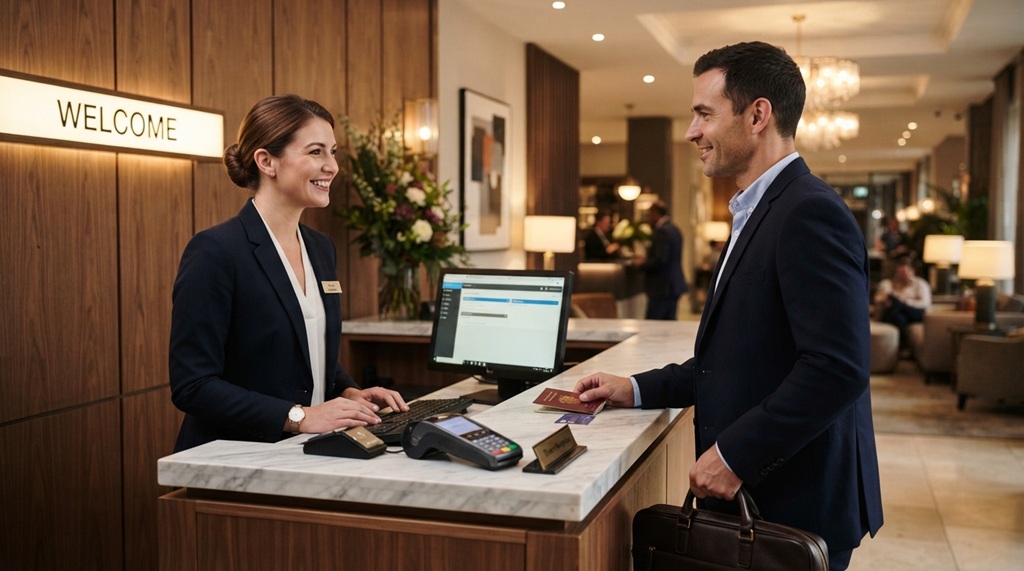
Long lines at the front desk hurt your guest experience before a guest even sees their room. You can fix this with three things: smarter staffing, the right technology, and a queue layout that keeps lines moving. This guide breaks down exactly how to do that, step by step.
Front desk queues build up fast during peak check-in hours, usually between 3 PM and 6 PM. When ten guests arrive within twenty minutes and only one agent is on duty, frustration spreads quickly. That frustration shows up in reviews, and it costs you repeat bookings.
The good news is that queue problems are fixable. Most hotels don’t need a bigger lobby or a bigger budget. They need a better system. Below, we cover the exact strategies that hotel managers use to move guests through check-in faster, without cutting corners on service.
Why Front Desk Queues Form in the First Place
Queues form when guest arrivals outpace your check-in capacity. This happens for a few predictable reasons, and knowing which one applies to your property is the first step to solving it.
Uneven Arrival Patterns
Most guests don’t arrive evenly across the day. Flights land in clusters, tour buses drop off groups at once, and check-in time on the booking confirmation pulls everyone toward the same hour. Your staffing plan needs to match these patterns, not a flat average.
Slow Manual Processes
Every extra step at check-in adds seconds that turn into minutes when a line is forming. Manually copying ID details, printing paper forms, or searching for a reservation in a slow system all slow things down. Small friction points add up fast when six guests are waiting behind the counter.
Understaffing During Peak Hours
Many hotels schedule the same number of front desk agents all day. This looks efficient on paper but fails during the 3 PM to 6 PM rush. One agent handling a ten-minute check-in for each guest means a line of six people waits nearly an hour.
Dynamic Front Desk Staffing: Aligning Peak Arrivals with Operational Efficiency
Shortening queue times requires precision staffing that directly mirrors real-time guest arrival patterns rather than static daily traffic averages. By deploying high-capacity coverage strictly during high-volume check-in windows, hotels transform front desk bottlenecks into frictionless arrivals while ensuring peak guest satisfaction a proven approach that demonstrates how to reduce hotel operational costs without cutting quality.
Schedule Around Historical Check-in Data
Pull your property management system’s check-in timestamps from the last few months. Most hotels find that 60-70% of check-ins happen in a three-hour window. Use that data to add one or two extra agents during those hours instead of spreading staff evenly across a full shift.
Cross-Train Staff for Front Desk Support
Bell staff, concierge, and even back-office team members can help during rush periods if they know the basics of check-in. Cross-training two or three non-front-desk employees gives you a flexible backup team you can call on without hiring extra full-time staff.
Use a Float Position During Peak Hours
A “float” employee moves between tasks based on where the bottleneck is. During check-in rushes, this person jumps behind the desk. During quieter periods, they handle other duties. This keeps labor costs controlled while still solving the peak-hour problem.
Technology That Speeds Up the Check-in Process
The right technology removes manual steps and gets guests to their rooms faster. You don’t need every tool on the market just the ones that solve your specific bottleneck.
Mobile and Kiosk Check-in Options
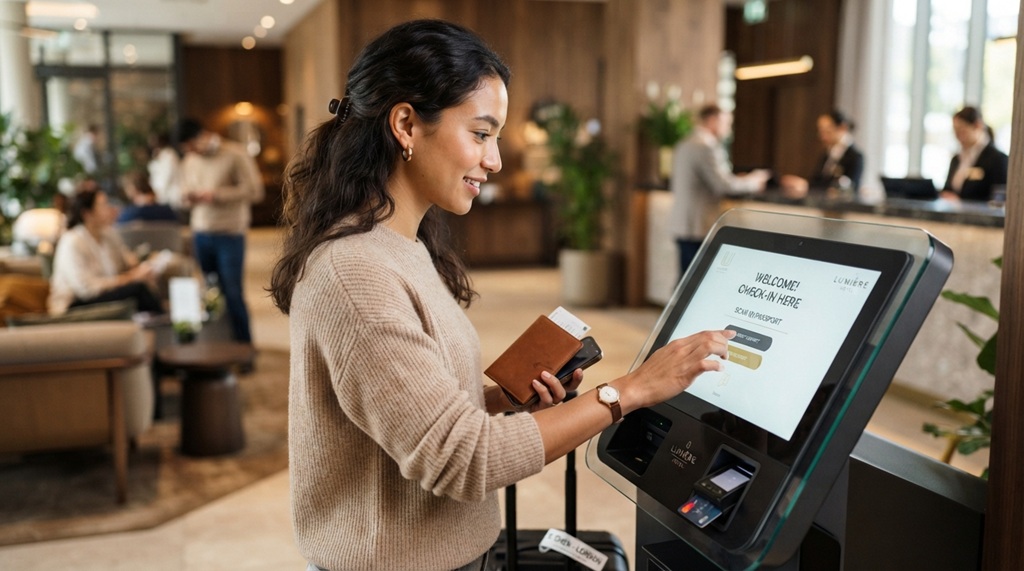
Guests who check in on their phone or at a self-service kiosk skip the front desk line entirely. According to industry experts, hotels that offer mobile check-in see a meaningful drop in front desk congestion during peak hours, especially among business travelers who value speed over interaction.
Pre-Arrival ID and Payment Verification
Ask guests to upload ID and confirm payment details before arrival through a booking confirmation link. When this step happens ahead of time, front desk agents only need to hand over keys and confirm details. This alone can cut in-person check-in time by half.
Real-Time Queue Monitoring Tools
Some property management systems now include dashboards that show live queue length and average wait time. Managers can watch this in real time and pull in backup staff before a line gets out of hand, rather than reacting after guests are already frustrated.
Designing a Front Desk Layout That Prevents Bottlenecks
Your physical layout affects how quickly a line moves, even before you consider staffing or technology. A few layout changes can make a noticeable difference without any renovation budget.
Separate Lines for Check-in and Check-out
Guests checking out usually need less time than guests checking in. Mixing both groups into one line slows everyone down. A separate, clearly marked line for check-out lets you clear that group fast and keep the check-in line moving on its own.
Add a Dedicated Line for Loyalty Members or Group Bookings
Group bookings and loyalty members often have simpler or pre-verified check-ins. A separate lane for these guests prevents a single complex individual check-in from holding up a line of ten people behind them.
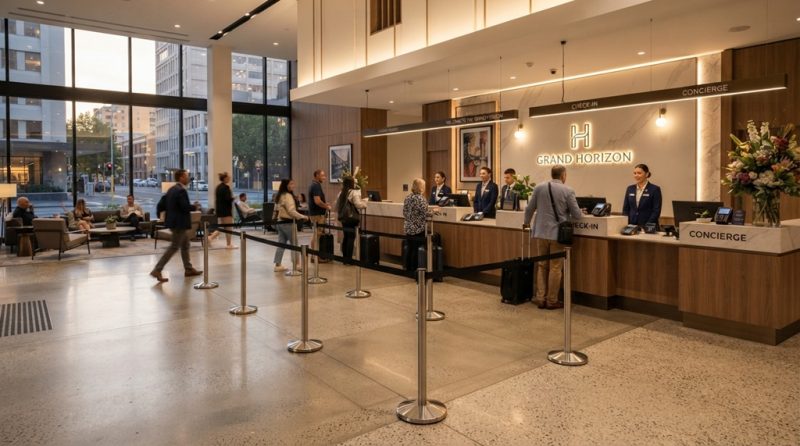
Use Clear Signage and Queue Ropes
A line without a defined path spreads out and confuses guests about where to stand. Simple stanchions or floor markings guide guests into an orderly single line, which reduces the perceived wait time even when the actual wait is unchanged. This is a detail many hotels skip, but it has an outsized effect on guest patience.
A Genuinely Useful Angle Most Guides Miss: Managing Guest Perception, Not Just the Clock
Most articles on this topic only talk about cutting actual wait time. But guest satisfaction depends just as much on perceived wait time, and that’s a separate problem you can solve cheaply.
Research on service queues has long shown that unoccupied time feels longer than occupied time. A guest standing in silence for five minutes feels more frustrated than a guest standing for five minutes while an agent greets them, offers water, or gives them a property map to review.
Here’s how to apply this at your front desk:
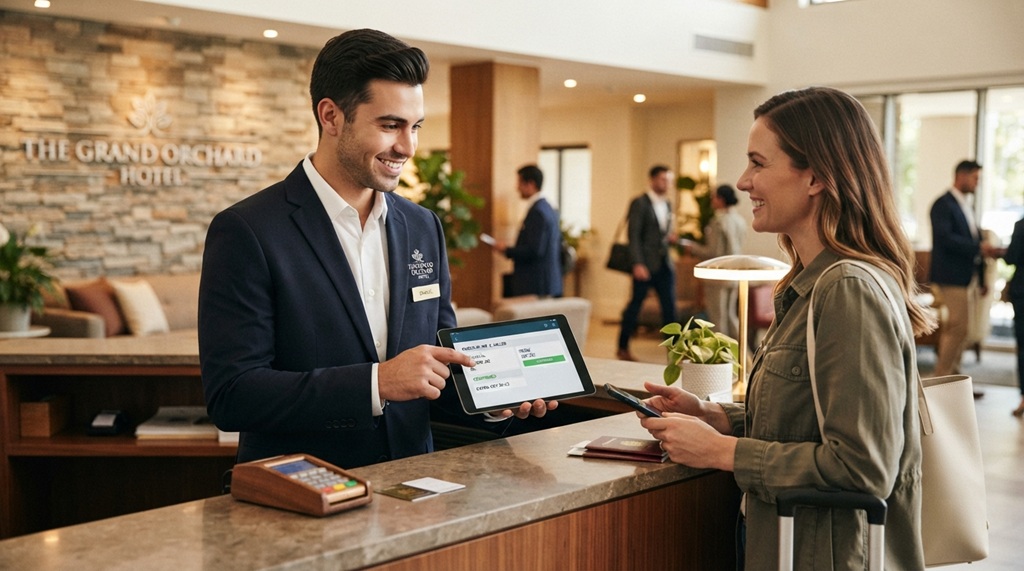
- Greet every guest within 30 seconds of joining the line, even if you can’t check them in yet. A simple “We’ll be right with you” resets their patience clock.
- Assign a staff member to walk the line during rush hours. This person hands out welcome materials, answers quick questions, or offers a drink. It doesn’t reduce the real wait, but it makes the wait feel shorter.
- Post an honest wait-time estimate. Guests tolerate a known 10-minute wait better than an unknown wait, even if the unknown wait turns out shorter.
This single shift, from managing only the clock to managing the guest’s experience of the clock, is often cheaper to implement than any technology upgrade, and it moves the needle on reviews just as much.
How to Measure If Your Queue Management Is Actually Working
You can’t improve what you don’t track. A few simple metrics tell you whether your changes are working or just feel like they’re working.
Track Average Check-in Time Per Guest
Most property management systems log the time between a guest joining the queue and completing check-in. Review this weekly during peak hours. A drop of even two minutes per guest adds up to a much shorter line over a busy afternoon.
Monitor Guest Feedback Mentions of Wait Times
Search your reviews and post-stay surveys for words like “line,” “wait,” or “queue.” A rising or falling trend in these mentions tells you directly whether guests are noticing your changes, which matters more than internal metrics alone.
Watch Peak-Hour Staffing Against Actual Arrivals
Compare your scheduled staff count against your actual check-in volume by hour. If you consistently see gaps of three or more guests waiting per agent during certain hours, that’s a clear signal to adjust the schedule further.
FAQ
How many front desk agents do I need during peak check-in hours?
There’s no universal number it depends on your average check-in time and your peak arrival volume. As a starting point, aim for no more than three to four guests waiting per agent at any moment. If your check-in takes five minutes per guest, one agent can reasonably handle a line of four before wait times start to hurt guest satisfaction.
Does mobile check-in actually reduce front desk lines?
Yes, mobile check-in reduces the number of guests who need to visit the desk in person, which shortens the line for everyone else. It works best when paired with a simple key pickup or delivery process, since guests still need physical access to their room in most properties.
What’s the biggest mistake hotels make with front desk queues?
The most common mistake is scheduling staff evenly across the day instead of matching staff levels to actual arrival patterns. This leaves hotels short-staffed during the exact hours when guests arrive in the highest numbers, usually mid-to-late afternoon.
How can a small hotel with a limited budget reduce wait times?
Small hotels can start with layout changes and staff scheduling, both of which cost little to nothing. Separating check-in and check-out lines, cross-training existing staff for peak hours, and greeting guests promptly all reduce both real and perceived wait time without new technology spend.
Should I use a queue management software system?
A dedicated queue system helps larger properties with high guest volume, but it isn’t necessary for every hotel. Smaller properties often get similar results from good scheduling, pre-arrival verification, and clear line signage before investing in dedicated software.
Conclusion
Fast check-ins come from three things working together: staffing that matches your real arrival patterns, technology that removes manual steps, and a layout that keeps lines organized. Add in one often-overlooked detail, managing how the wait feels and not just how long it is, and you’ll see the impact show up in both your check-in times and your guest reviews. Start with the change that fits your budget today, measure the result, and build from there.