You can use AI in hotel guest service by automating repetitive tasks like check-in, FAQs, and room requests while keeping staff focused on moments that need real human judgment. The goal isn’t to replace your team. It’s to give them more time for the guests who need a human conversation, not a chatbot.
Many hotels rush into AI tools and end up with guests who feel like they’re talking to a wall. That’s not an AI problem. That’s a planning problem. Done right, AI handles the boring, repetitive work. Your staff handles the rest.
This guide breaks down exactly where AI helps, where it hurts, and how to build a system that feels efficient without feeling cold.
Where AI Actually Helps in Hotel Guest Service
AI works best in hotel guest service when it handles predictable, repetitive tasks that don’t need emotional judgment. Think check-in confirmations, room service orders, and answering the same 20 questions guests ask every day.
Front Desk and Check-In
AI-powered kiosks and mobile check-in tools let guests skip the line entirely. Guests scan a QR code, confirm their ID, and get a room key sent to their phone. This cuts wait times, especially during busy check-in windows.
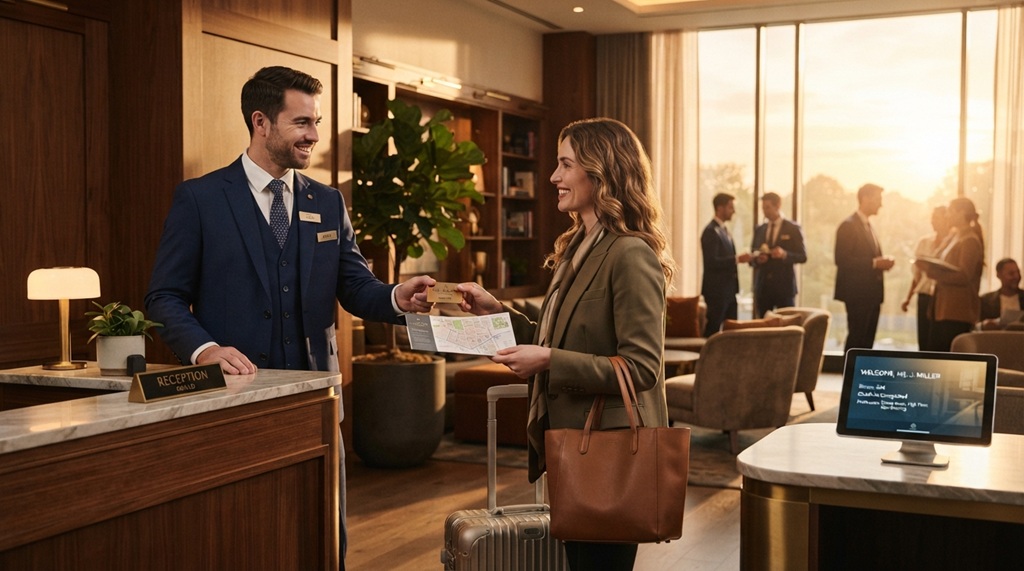
Staff still stand nearby. They step in for special requests, upgrades, or anyone who looks confused by the kiosk. The AI handles the paperwork. The human handles the person.
Answering Repetitive Questions
Guests ask the same questions constantly: What time is breakfast? Where’s the pool? Does the gym open early? A chatbot or AI-powered messaging system can answer these instantly, day or night.
This matters most for late-night questions. A guest who lands at midnight and wonders if room service is still open shouldn’t wait for a live agent. An AI assistant answers in seconds.
Personalized Recommendations
AI can track guest preferences like room temperature, pillow type, or past dining choices and use that data to personalize future stays. According to industry experts, this kind of personalization increases guest satisfaction and repeat bookings.
For example, if a guest always orders decaf coffee, the system can flag that for the room service team before they even ask.
Where AI Falls Short (And Why That Matters)
AI struggles with anything emotional, complex, or unexpected. Complaints, special occasions, and unusual requests all need a human who can read tone and respond with empathy.
Complaints and Service Recovery
A guest complaining about a noisy room or a billing mistake doesn’t want a scripted bot response. They want to feel heard. Automated replies in these moments often make guests angrier, not calmer.
Train your team to spot when a conversation needs to move from AI to human immediately. The faster that handoff happens, the better the outcome.
Emotional or Sensitive Situations
Weddings, anniversaries, funerals, medical emergencies these moments need real people. AI can help behind the scenes (like flagging a guest’s anniversary date), but the actual interaction should come from staff.
Unusual or One-Off Requests
AI systems are built on patterns. When a guest asks for something outside the normal script, the AI often fails or gives an unhelpful answer. Staff need to catch these moments quickly and step in.
Blending AI and Human Touch

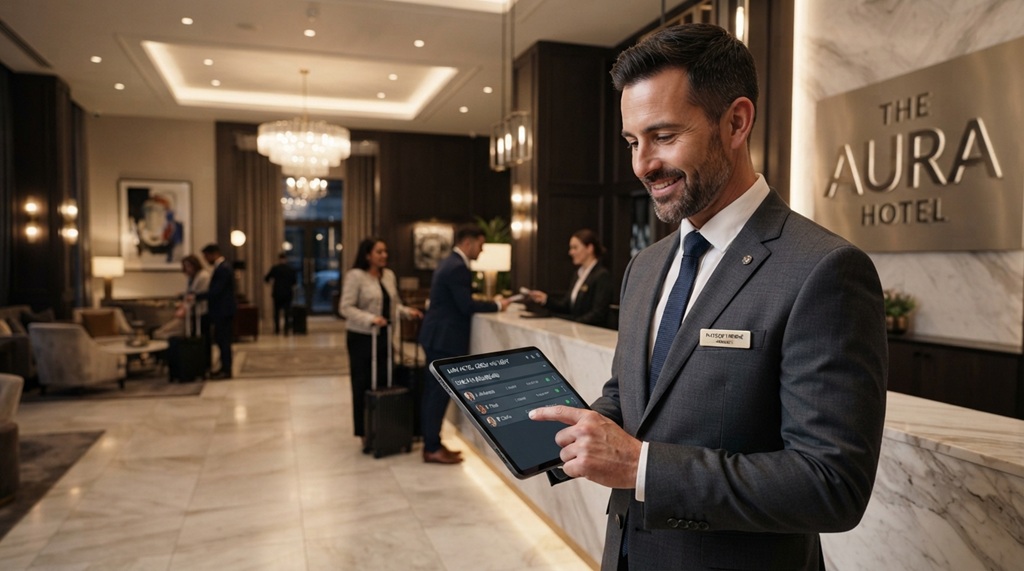
The most sophisticated hospitality AI operates effortlessly behind the scenes, elevating response times while keeping the human connection at the forefront of the guest experience. Rather than replacing personal interaction, smart technology should quietly inform your staff, empowering a male concierge to anticipate individual preferences, greet guests by name, and deliver deeply personalized recommendations without missing a beat. When digital efficiency works in tandem with authentic warmth, service feels faster and more intuitive never transactional or automated. To complement these seamless tech upgrades, forward-thinking hoteliers must also curate physical environments that reflect guest values; exploring improve sustainable hotel practices to attract guests allows you to deliver a high-tech, eco-conscious stay that feels thoughtfully tailored from check-in to checkout.
Use AI for the First Response, Humans for Follow-Up
Let AI handle the first message confirming a request, answering a simple question, or routing an issue. If the situation needs more than a yes-or-no answer, route it to a staff member fast.
This keeps response times low without sacrificing quality. Guests get an instant reply, and a real person still handles anything complicated.
Train Staff to Work With AI, Not Around It
Staff often resist AI tools because they think it threatens their job. Instead, train them to see AI as a tool that removes the boring parts of their day. Less time answering “what time is checkout” means more time solving real problems.
Give staff visibility into what the AI already told a guest. Nothing frustrates a guest more than repeating information they already gave a chatbot.
Set Clear Escalation Rules
Build simple rules for when AI should hand off to a human. For example: any message with a complaint keyword, any request repeated twice, or any guest who explicitly asks for a person. Make these rules visible to staff so no one gets confused about ownership.
Choosing the Right AI Tools for Your Property
Not every hotel needs the same AI setup. A boutique property with 20 rooms has different needs than a 300-room resort.
Match Tools to Guest Volume
Smaller properties may only need a simple chatbot for FAQs. Larger properties benefit from full guest messaging platforms that integrate with the property management system (PMS).
Check Integration With Existing Systems
An AI tool that doesn’t talk to your PMS or booking engine creates more work, not less. Before buying anything, confirm it connects cleanly with the systems your staff already use daily.
Test With Real Staff Before Full Rollout
Run a trial period with a small group of staff before rolling out AI hotel-wide. Ask them what feels clunky, what guests complain about, and what needs fixing. Staff feedback catches problems that vendor demos never show.
A Practical Framework: The 80/20 Rule for AI in Guest Service
Here’s an angle most articles skip: think of AI as handling 80% of guest interactions the routine, predictable ones while staff focus on the 20% that actually shapes guest loyalty.
That 20% includes complaints, celebrations, VIP guests, and anything unexpected. These are the moments guests remember and talk about. If your AI system frees up staff time specifically for these moments, you’ll see the biggest return not from automation itself, but from what your team does with the time it saves.
Track this split. If staff are still buried in repetitive tasks after adding AI, the tool isn’t set up correctly. Revisit what’s actually being automated.
Measuring Whether Your AI Strategy Is Working
Don’t just track response time. Track guest sentiment, complaint volume, and staff feedback together.
Watch Guest Reviews for Language Shifts
If reviews start mentioning words like “robotic,” “impersonal,” or “felt rushed,” that’s a signal your AI-human balance is off. Positive reviews mentioning “quick” and “helpful staff” together mean the system is working.
Ask Staff Directly
Staff know faster than any dashboard when AI is causing friction. Set up a simple monthly check-in where staff can flag what’s not working.
Track Repeat Bookings
Personalization done well often shows up in repeat booking rates over time. If guests come back and mention that the hotel “remembered” something about them, that’s the AI working in the background correctly.
FAQ
Will AI replace hotel front desk staff?
No. AI handles repetitive tasks like check-in confirmations and FAQs, but staff are still needed for complaints, special requests, and any situation requiring judgment. Hotels that remove staff entirely often see guest satisfaction drop.
What’s the easiest AI tool to start with for a small hotel?
A simple AI chatbot for common questions like check-in times, parking, and amenities is usually the easiest starting point. It requires minimal setup and gives guests instant answers without needing full PMS integration.
How do I know if my AI is hurting guest experience instead of helping?
Watch for complaints about feeling “ignored” or “stuck in a loop” with automated responses. If guests repeatedly ask to speak to a real person, your escalation rules likely need adjusting.
Can AI help with personalized guest service, or does it make things feel less personal?
AI can support personalization by tracking preferences like room temperature or dietary needs, then alerting staff. The personal touch still comes from staff acting on that information, not from the AI itself.
Is it expensive to add AI to hotel guest service?
Costs vary widely based on property size and the tools chosen. Smaller properties can start with low-cost chatbot tools, while larger hotels may invest more in full messaging platforms integrated with their PMS.
Conclusion
AI in hotel guest service works best as a support tool, not a replacement for people. Let it handle the repetitive stuff check-ins, FAQs, routine requests so your staff can focus on the moments that actually build guest loyalty.
The hotels that get this right don’t ask “how much can we automate?” They ask “what does automation free our team up to do better?” That question keeps the human touch intact, even as the technology gets smarter.