You can improve hotel guest satisfaction scores fast by fixing the three things guests complain about most: check-in speed, room cleanliness, and staff response time. These three areas drive the majority of low review scores across the industry. Fix them first, and you will see movement in your scores within weeks, not months.
Guest satisfaction scores feel abstract until you connect them to revenue. A property with strong scores ranks higher on OTAs, earns more direct bookings, and spends less on winning back unhappy guests. A property with weak scores does the opposite. It pays more for visibility and loses loyal guests to competitors down the street.
This guide skips the theory. It gives your team a clear, practical path to raise scores quickly, using changes you can start today with the staff and budget you already have.
Why Guest Satisfaction Scores Matter for Hotel Revenue
Guest satisfaction scores matter because they directly shape your bookings, your pricing power, and your reputation online. A one-point drop in your average review score can measurably reduce your booking conversion rate on major travel sites. Guests use these scores as a trust signal before they use price.
Higher scores also let you charge more. Guests pay a premium for hotels they trust to deliver a consistent experience. When your scores rise, you gain room to adjust rates without losing bookings, because guests already expect value from you.
Finally, strong scores reduce your marketing costs over time. Happy guests leave positive reviews, which act as free advertising. Unhappy guests leave detailed complaints, which future guests read closely before they book elsewhere.
Audit Your Guest Feedback in 24 Hours
You cannot repair guest satisfaction without first measuring its baseline, making a rapid, unvarnished audit of your existing sentiment data the essential starting point. Extract your last 90 days of review data across Google, Booking.com, TripAdvisor, and internal post-stay surveys, then categorize every negative comment into staff, property, or process breakdowns. A small management team can complete this breakdown in half a day, typically revealing that two or three recurring friction points drive the vast majority of negative ratings. Rather than attempting a slow, broad operational overhaul, immediately isolate the top two most frequent complaints and concentrate your first week of interventions directly on them—a targeted precision that rapidly stabilizes review scores, builds guest loyalty, and establishes the operational foundation needed to scale boutique hotel revenue with proven frameworks for sustainable financial growth.
Fix the Top Three Complaints First
Most hotels share the same three pain points, and guests notice these issues within the first hour of their stay. Fixing them delivers the fastest visible improvement in your scores.
Speed Up Check-In and Check-Out
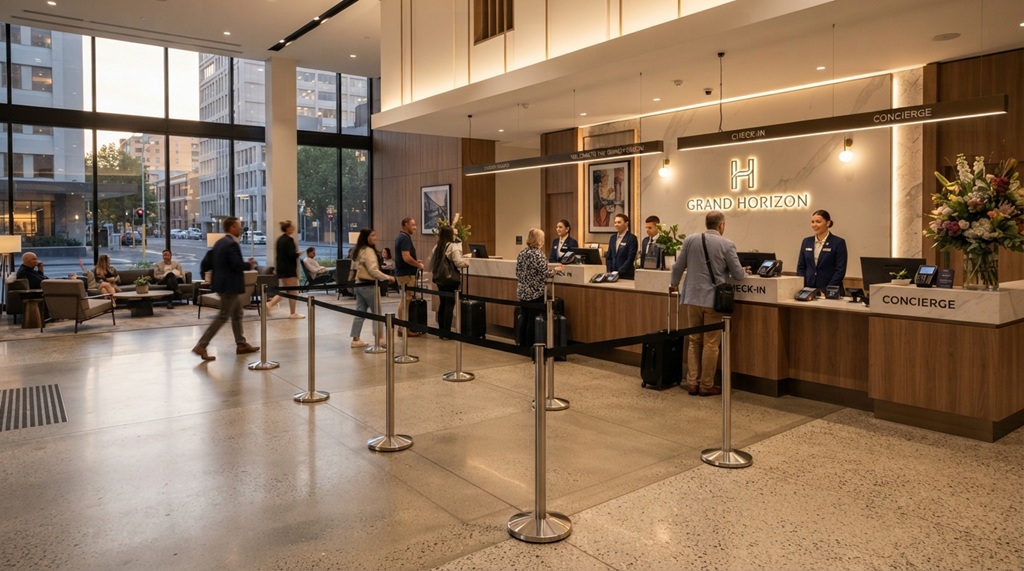
Long lines at the front desk create a negative first impression before guests even see their room. Add a mobile check-in option, or simply pre-assign rooms and prepare keys before guests arrive during known busy hours. Even a five-minute reduction in wait time changes how guests describe their arrival experience in reviews.
Improve Room Cleanliness Consistency
Cleanliness complaints usually come from inconsistency, not from a single dirty room. Build a short, visual checklist for housekeeping that covers the ten items guests notice most: bathroom surfaces, bedding, floors, mirrors, and trash removal. Have a supervisor spot-check five rooms daily instead of relying on housekeeping self-reports alone.
Train Staff for Faster Response Times
Guests forgive small problems when staff respond quickly and kindly. They rarely forgive being ignored. Set a simple internal rule: every guest request gets acknowledged within two minutes, even if the fix takes longer. A quick “we’re on it” message reduces frustration far more than people expect.
Use Technology to Close Feedback Gaps Fast
Technology helps you catch problems while guests are still on property, not after they have already left a negative review. A simple mid-stay text or app message asking “How is everything so far?” gives unhappy guests a private channel to complain, instead of a public one.
Automated alerts also matter. If your property management system flags a maintenance request that has sat open for more than 30 minutes, someone should see that alert immediately. According to industry experts, hotels that resolve in-stay issues before checkout see meaningfully higher post-stay review scores than those that only respond after guests leave.
You do not need expensive software to start. Many properties get real results using a shared messaging app or even a well-organized spreadsheet that tracks open requests and response times.
Personalize the Guest Experience Without Extra Cost
Personalization improves satisfaction scores because it makes guests feel remembered, not processed. This does not require a large budget or new software. It requires better use of the information you already collect.
Note guest preferences from previous stays, such as a request for extra pillows or a quiet room, and apply them automatically on the next visit. Greet returning guests by name at check-in using data your front desk system already stores. Small gestures like these show up repeatedly in five-star reviews, because guests notice when a hotel remembers them.
Staff can also personalize verbally. A simple question like “Is this your first time in the city?” opens the door to local recommendations, which guests consistently mention as a highlight of their stay.
Turn Negative Reviews Into Quick Recovery Wins

A negative review is not only a problem. It is also a fast opportunity to show future guests how your hotel handles issues. Respond to every negative review within 24 to 48 hours, and address the specific complaint by name rather than using a generic template.
Offer a genuine resolution when appropriate, such as a discount on a future stay or a direct apology from a manager. Future guests read these responses closely, and a thoughtful reply often does more to build trust than the original complaint does to damage it.
Internally, treat every negative review as a data point, not an attack. Log the complaint in your audit system so the pattern gets tracked alongside your other feedback data, not lost in a single response.
Track Progress With the Right Metrics
You need clear metrics to know if your changes are actually working, not just guesswork based on gut feeling. Track your average review score weekly, not monthly, during your improvement period so you catch problems and progress early.
Watch three numbers closely: overall review score, response rate to guest requests, and repeat guest percentage. A rising review score paired with a falling response time confirms your front-line changes are working. A rising repeat guest percentage tells you the improvements are building real loyalty, not just short-term satisfaction.
Set a realistic timeline. Most properties that apply focused, fast fixes see a measurable score improvement within four to six weeks, according to hospitality management consultants who track this data across multiple properties.
Frequently Asked Questions
How fast can hotels realistically improve guest satisfaction scores?
Most properties see measurable improvement within four to six weeks when they focus on two or three high-impact fixes, such as check-in speed and staff response time. Full score recovery for a property with serious, longstanding issues can take longer, often two to three months.
What causes low guest satisfaction scores most often?
Slow check-in, inconsistent room cleanliness, and slow staff response to requests cause the majority of low scores across the hotel industry. These issues affect the guest experience early in the stay, which shapes how guests judge everything that follows.
Does staff training really move the needle on satisfaction scores?
Yes. Guests consistently rate their stay higher when staff acknowledge problems quickly, even before the problem is fully solved. Training front-line staff to respond within minutes, rather than hours, produces some of the fastest visible score improvements.
How often should hotels ask guests for feedback?
Ask once during the stay through a quick check-in message, and once after checkout through a short survey. Asking too often annoys guests and lowers response rates, while asking only after checkout means you miss the chance to fix problems in real time.
What counts as a good guest satisfaction score benchmark?
Most successful independent hotels aim for an average review score above 4.3 out of 5 across major platforms. Scores below 4.0 usually signal a recurring operational issue that needs direct attention, rather than a series of unrelated one-off complaints.
Conclusion
Improving hotel guest satisfaction scores fast comes down to focus, not budget. Start with a one-day audit of your current feedback, fix your top two or three recurring complaints, and give staff the tools to respond to guests within minutes instead of hours. Track your scores weekly so you can see what is working and adjust quickly.
None of these steps require major renovations or expensive new systems. They require attention, consistency, and a willingness to act on the feedback guests are already giving you. Apply them this week, and your scores will start reflecting the improvement within a month.